

Bringing History Alive With AI: Brian Casto
Design Cognitively Demanding Tasks
 History teacher Brian Casto started
his journey with AI with a pressing need.
History teacher Brian Casto started
his journey with AI with a pressing need.
A student who was out with the flu for five days missed about 40 years of history and needed to make up a significant amount of work. Castro needed a way for the student to demonstrate understanding of the material and quickly catch up to the class.
Casto used a generative AI tool to write a text that summarized important facts and concepts of the time period they were studying, including 10 multiple-choice questions and a few open-ended questions that would help measure the student’s grasp of the material. Through some iterative prompts, he was able to further refine the assignment to an 8th-grade reading level.
Within a day, the student was able to read the three-page text and answer the questions, demonstrating understanding.
The Educator
Brian Casto teaches 8th grade West Virginia history at Milton Middle School in Milton, West Virginia. He received the 2022 West Virginia Teacher of the Year award and was the only West Virginia educator to be named an Apple Distinguished Educator in 2023.
He says he has pushed hard to find a good balance between technology and paper-and-pencil work in class, “where students aren’t getting too much of either one.”
How Have You Used AI in Your Classroom?
Recently, Casto expanded his use of AI to support project-based learning within his classroom.
Every year, his students do a project on Mary Draper Ingles, a West Virginia pioneer woman whose family was captured by the Shawnee tribe and eventually escaped and returned home.
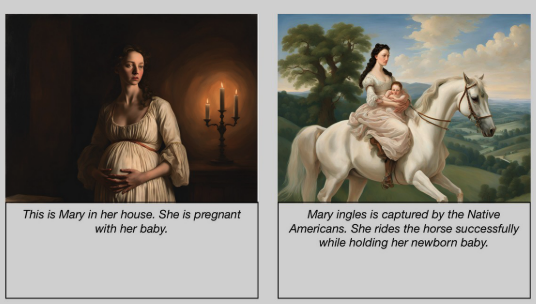
After students read about her life, they had to develop a comic strip using at least six panels to visually tell her the story of her life, capture and escape.
Casto taught students how to use the AI embedded within their district-approved software and devices to develop images that represent parts of her story.
He saw that it forced students to use adjectives and elements of their research to create a detailed enough prompt to produce an image to support their text.
He also noticed how students naturally engaged in the process and were able to help each other iterate and refine their prompts.
What Has Been the Impact of AI on Your Teaching and Learning?
Casto said AI has helped to streamline his thought process in lesson planning and resource development, such as with worksheets, visual images to support the learning process, and rubrics.
“AI has made planning much quicker with tools such as lesson plan developers and worksheet generators,” Casto said. “It can take your ideas and expand them while getting instant feedback.”
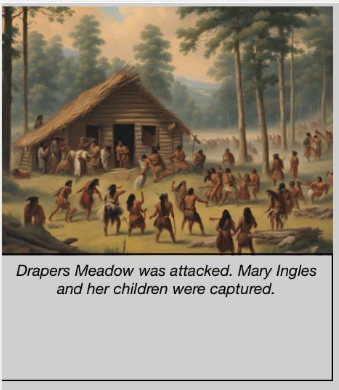
He has seen that AI can bring historical figures to life for the students. We may not have photos or visual representations of all historical figures, but through the use of AI, students can generate representations of those figures that are close to historically accurate.
AI has made planning much quicker with tools such as lesson plan developers and worksheet generators.
Furthermore, the act of developing and iterating a prompt forces students to use and reflect on their knowledge of history and historical context in a way that internet search engines cannot.
What Tips or Tricks Can You Give Educators Who Want to Start Using AI?
Casto suggested trying the AI tool yourself first before having students use it in your classroom.
Take an assignment that you are looking to improve. Use a generative AI tool as a thought partner to see how you might go deeper to better support students’ understanding or how you might get students to reflect on their learning.
Try the AI tool for yourself before having students use it in your classroom.
Once you feel comfortable with that, try more complex tools or work on teaching students to use them as part of an assignment.
AI can be a great first step in the research process for students to get a general understanding of a topic and start an outline, Casto said. Then, students can expand upon their learning with more detailed research using the internet and other textual resources.
Supporting Student Engagement and Thinking
The SREB report Guidance for the use of AI in the K-12 Classroom asks teachers to rethink how AI can support student thinking and engagement. It also calls for a shift toward higher cognitively demanding assignments that require critical thinking and creativity.
Casto’s story shows how a teacher can take project-based learning or other assignments and infuse AI into them.
The use of AI as part of the visualization process in the project helped students who might not consider themselves artistic use their knowledge and understanding of history to create visuals that enhanced their final product.