Doctoral Scholars Program
SREB-State Doctoral Scholars Program
The SREB-State Doctoral Scholars Program is a comprehensive initiative focused on doctoral persistence and attainment, addressing unique barriers while supporting scholars who bring varied life experiences to academia and choose academe as the career pathway.
The SREB-State Doctoral Scholars Program provides multiple layers of support — not only financial assistance and research funding, but also career counseling, job postings and a scholar directory for networking and recruiting. Mentoring and advocating on behalf of scholars is crucial, and support continues into early careers as graduates become faculty members. Each fall, a thousand scholars and young faculty members convene to learn and support one another at the Institute on Teaching and Mentoring.
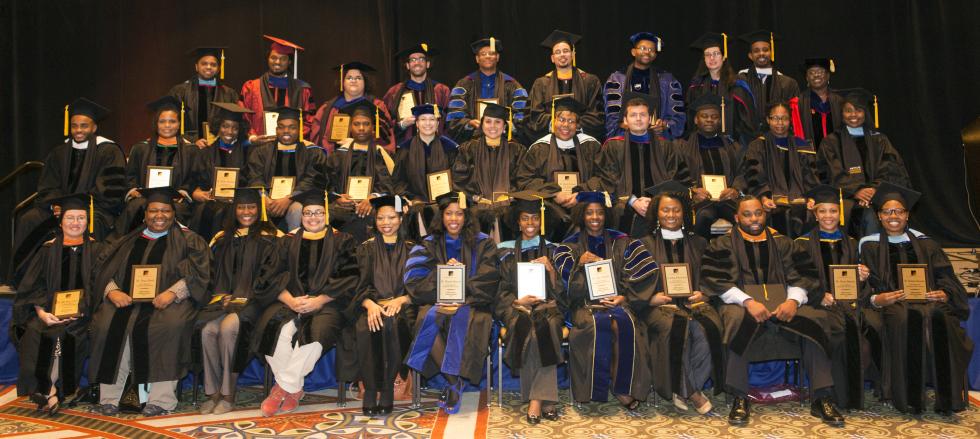
More than 1,300 Graduates and Counting
The goal of the Doctoral Scholars Program is to increase the number of students who earn doctorates and choose to become faculty at colleges and universities. Since its founding in 1993, the program has supported more than 2,300 scholars who have attended 113 institutions in more than 30 states.
Institute on Teaching and Mentoring
Upcoming Dates, Locations
| 2026 | 2027 |
|---|---|
| October 29-November 1 Crystal Gateway Marriott Arlington, Virginia |
October 28-31 New Orleans Marriott New Orleans, Louisiana |
| 2028 | 2029 |
|---|---|
|
October 26-29 |
October 25-28 |


SREB-State Doctoral Scholars Program Cohort
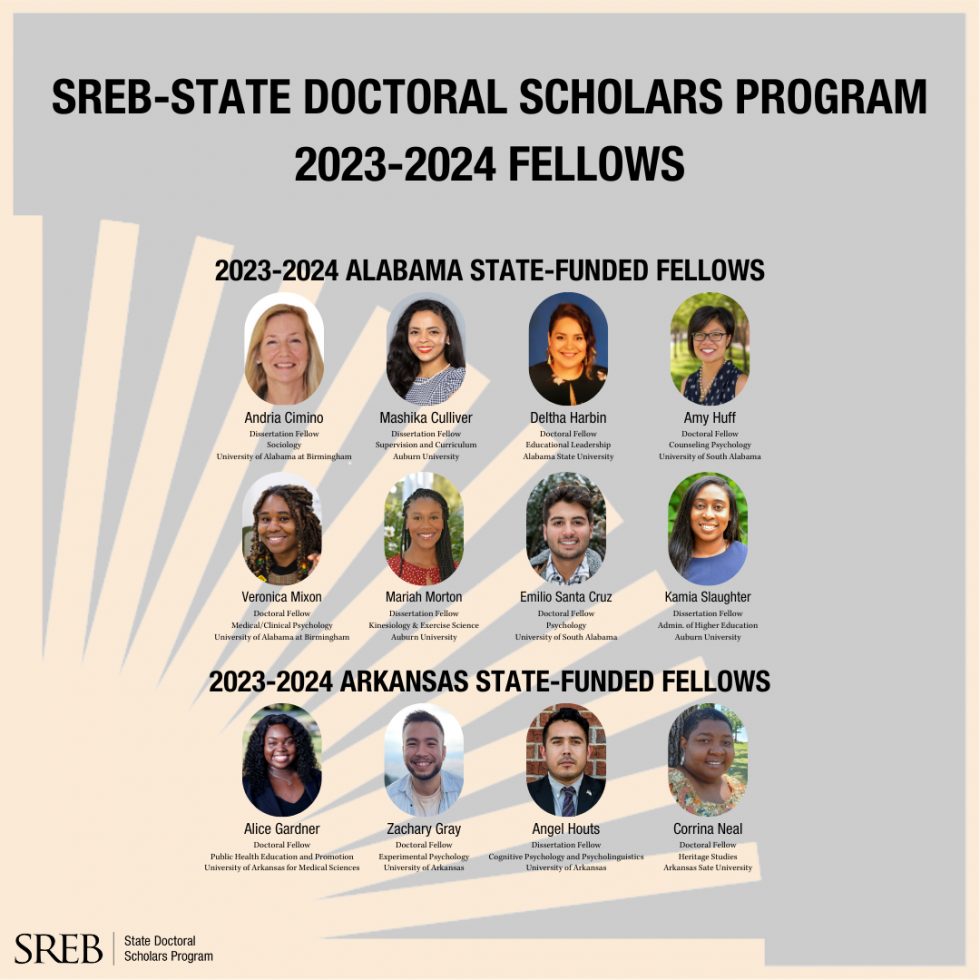
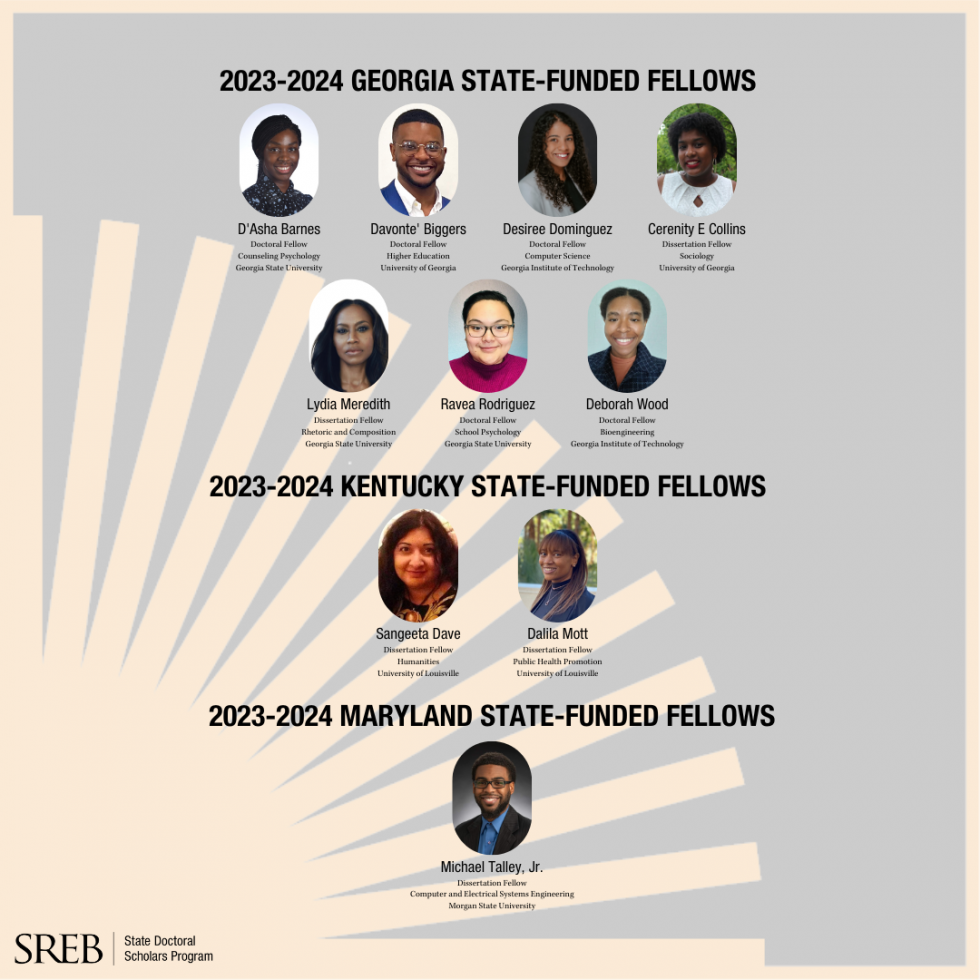
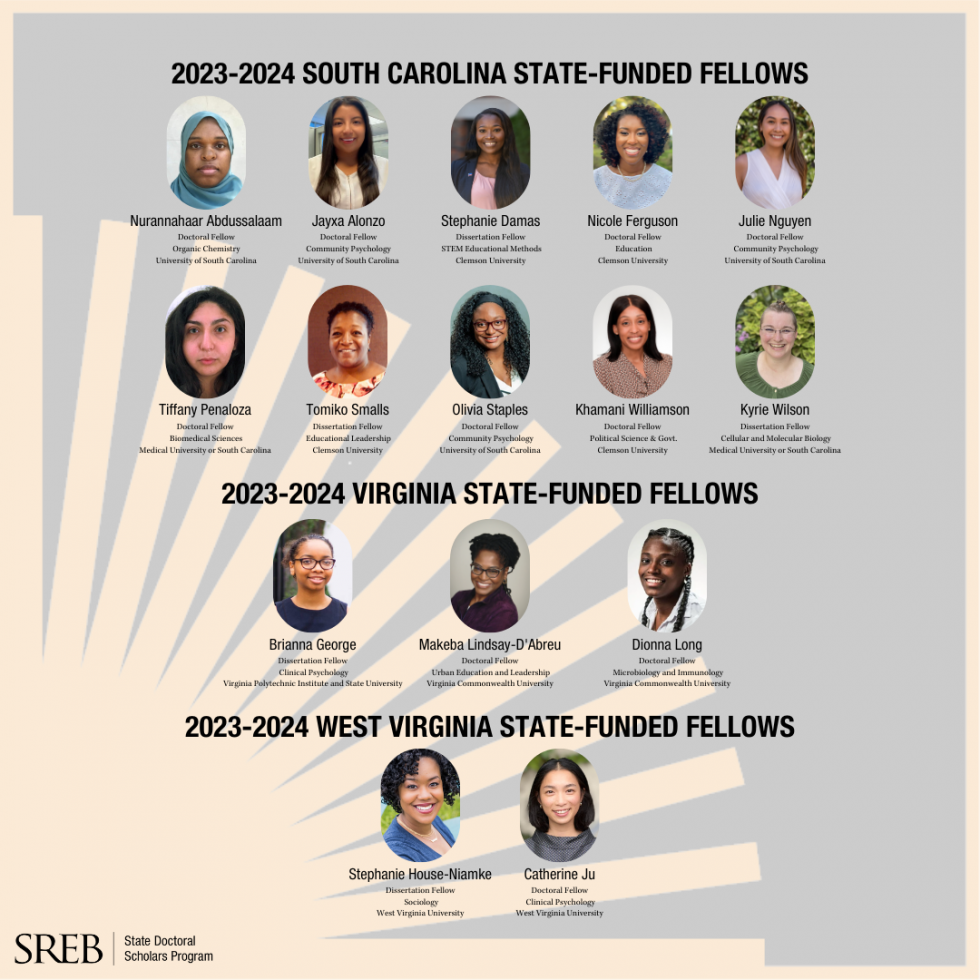
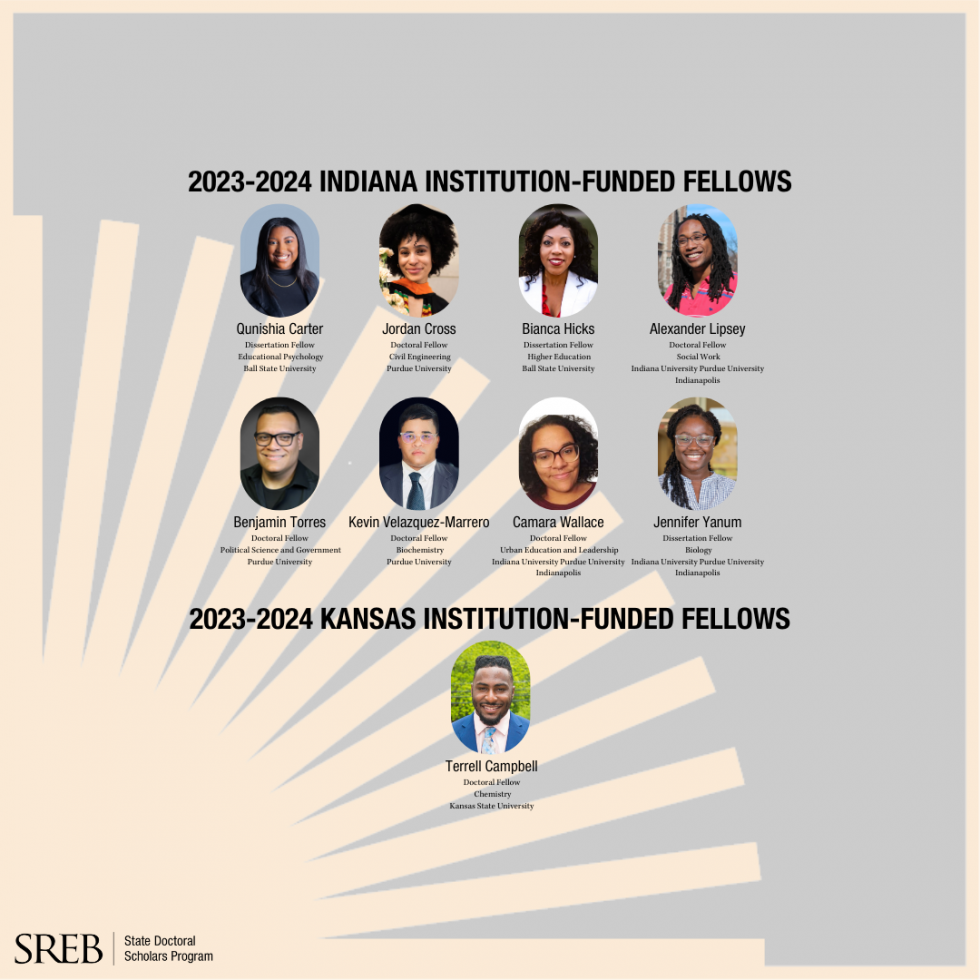
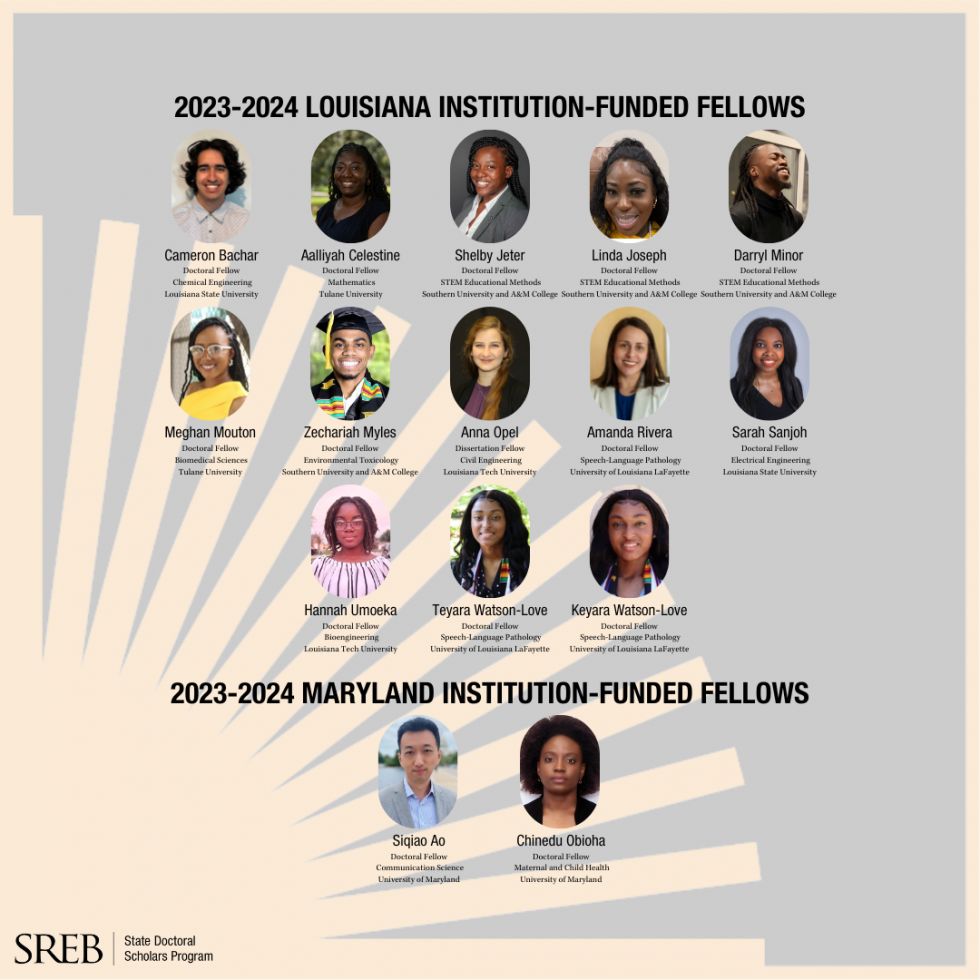
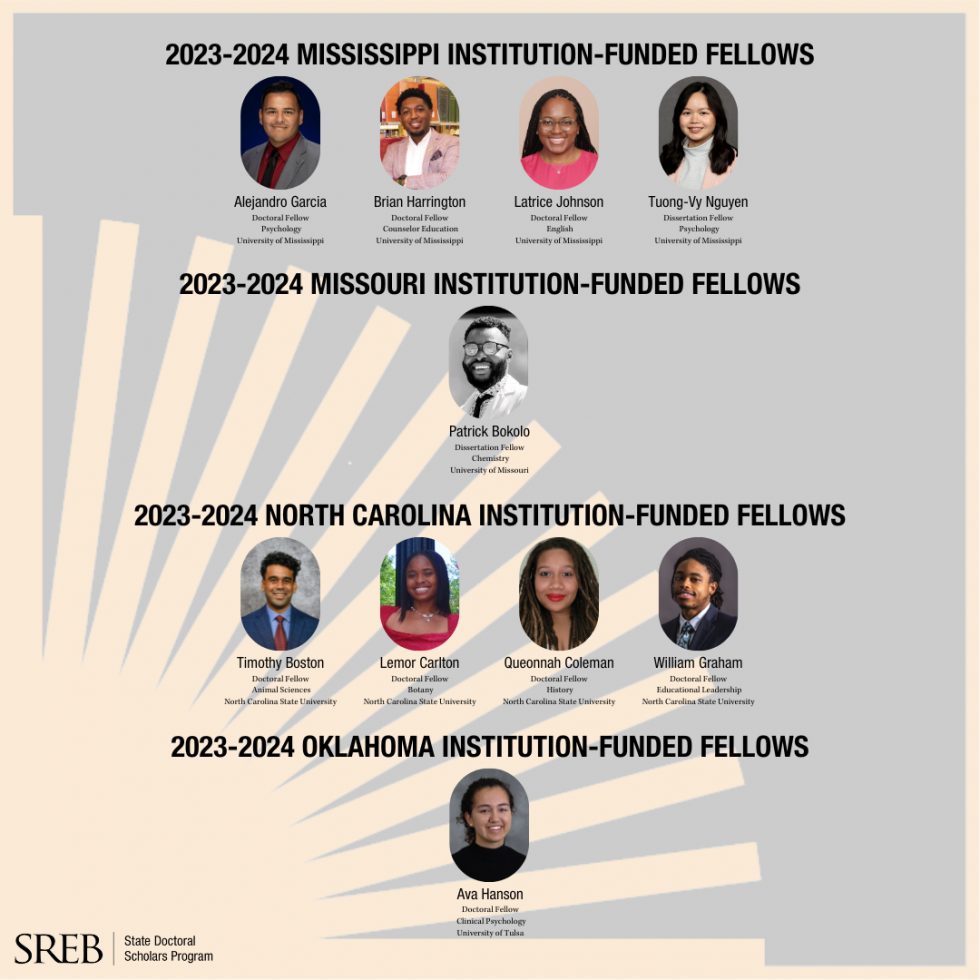
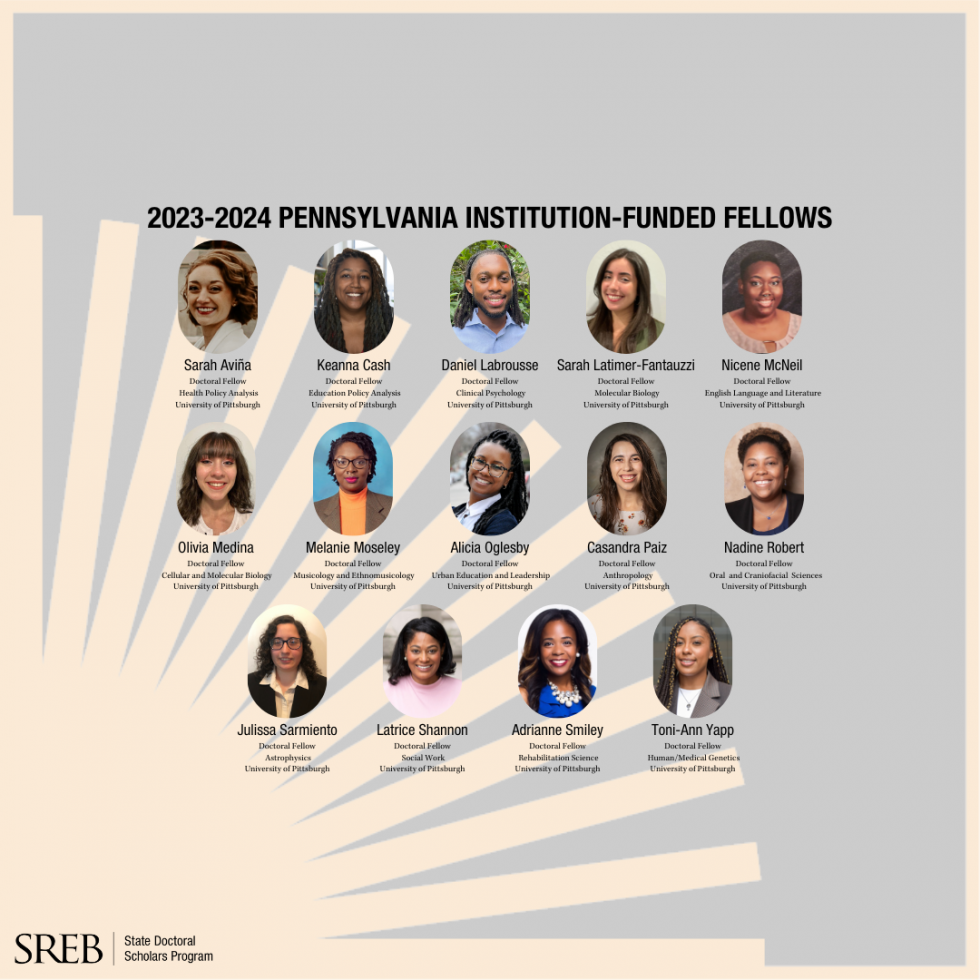
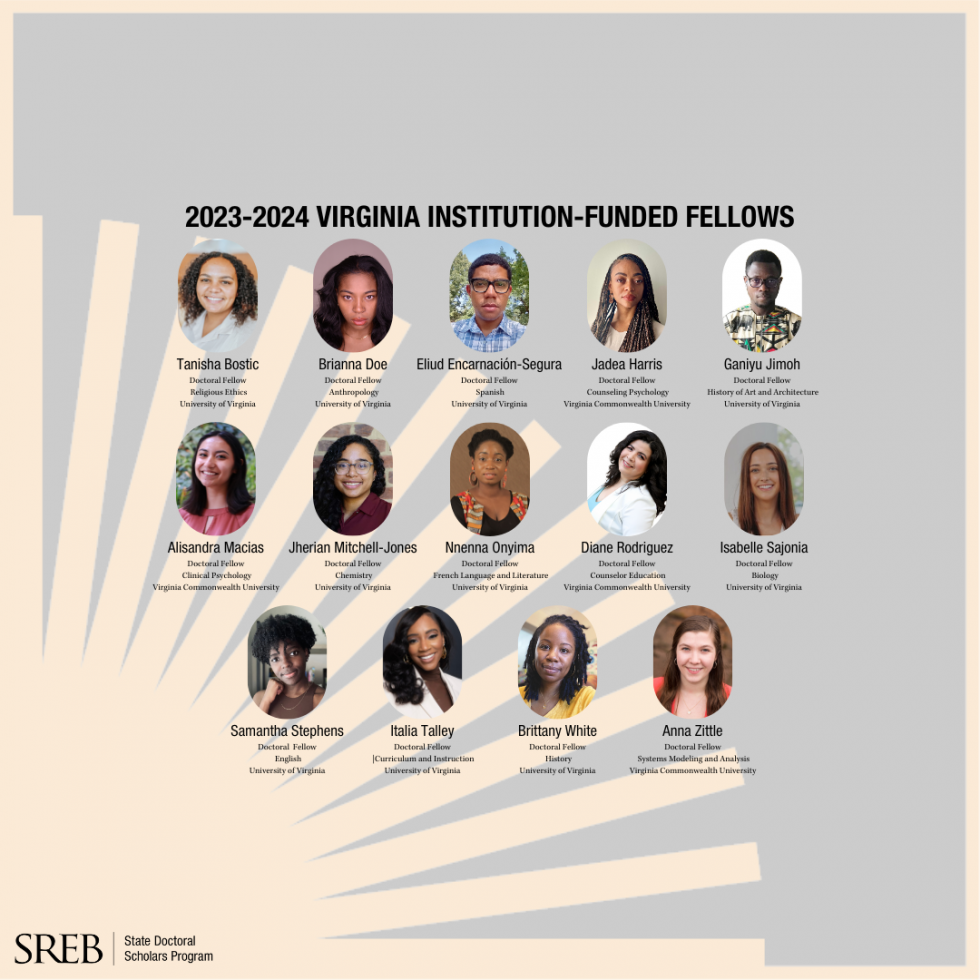
2023-2024 DSP Scholar Cohort Photo Gallery
The SREB-State Doctoral Scholars Program’s 2023-2024 Fellowship recipients are at the forefront of groundbreaking research and innovation in their pursued Ph.D. concentrations.

Outstanding Institute Alumnus Award
Submissions are open for the 2026 Outstanding Institute Alumnus Award.
For this award the Institute on Teaching and Mentoring is seeking nominations of previous Institute scholars who have made significant achievements and/or professional contributions during their careers. The deadline for nomination submissions is September 18, 2026 at 5 p.m. Eastern.
Full details > Outstanding Institute Alumnus Award Nomination Packet