

Beyond Compliance: Decoding Motivation and AI in the Modern Classroom
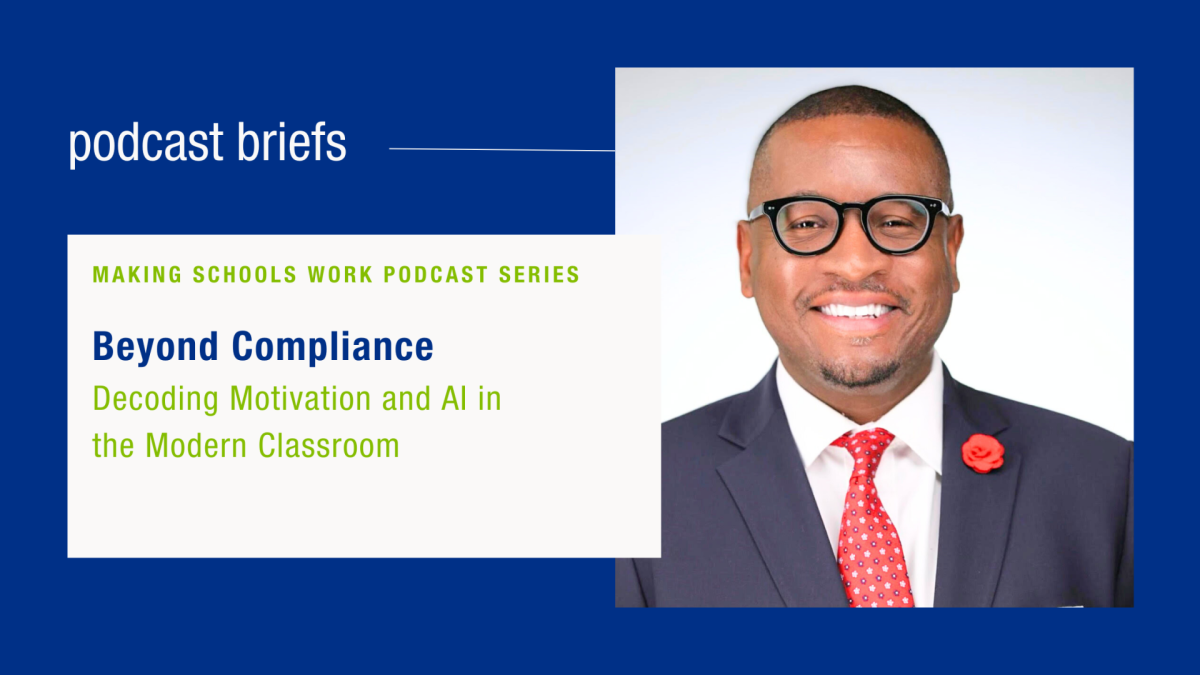
In our latest episode of the Making Schools Work podcast, hosts Daniel Rock and Erin Anderson-Williams sit down with Dr. Tony Johnson, founder of Captivate Perspectives.
With over 25 years of experience in K-12 and CTE, Johnson offers a roadmap for educators navigating the complex intersection of generational shifts and the rise of artificial intelligence.
Finding the Student’s “Why”
One of the greatest challenges in modern education is moving students from compliance engagement — doing the work just to get it done — to authentic engagement. Johnson argues that this shift begins by understanding a student’s “Why.”
Often, educators from Gen X or the Baby Boomer generation impose their own values (like the necessity of a high school diploma) on Gen Alpha students. However, if a student doesn’t share that “Why,” motivation will stall. Educators should instead focus on:
- Short-term and Long-term Goals: Assessing what the student actually wants to accomplish today and in the future.
- Flexibility: Allowing students to change their minds about their career paths as they grow.
- Support and Encouragement: Being a cheerleader who motivates them to continue moving forward, regardless of where they are in the process.
The Language of Love in Education
Johnson discusses the concept of love languages as a tool for student engagement. While not in the official job description, education is essentially an act of love.
Understanding how a student receives and gives love can fundamentally change the classroom dynamic:
- Gift Giving: A student might feel valued through a small token like a piece of candy or a pencil.
- Words of Affirmation: Encouraging words can provide the emotional safety a student needs to take risks in their learning.
- Quality Time: Taking a moment to truly listen or check in on a student’s well-being.
AI: From “Cheating Tool” to “Tutor Mike”
When speaking about the differences in motivation and learning across different generations, the conversation inevitably turns to AI. Johnson’s message is clear: AI is here to stay, and educators must develop AI literacy. Rather than banning it, we can teach students to use it in positive, productive ways.
He introduces “Tutor Mike,” a concept where a student uses prompt engineering to turn an AI into a personalized biology tutor that knows their textbook, their grade level and their specific learning struggles.
With this in mind, he presented some positive ways that AI will benefit students:
- Authentic Learning: Use AI as a thought partner to generate ideas or outlines but require students to demonstrate critical thinking in real-time.
- Gamification: Use AI to help students create games to learn content, making the classroom experience more exciting and competitive with the pull of smartphones.
The Human Advantage
While he points out the benefits of AI, Johnson also acknowledges the pitfalls, especially when it comes to real human interactions and outsourcing problem solving.
Ultimately, Johnson reminds us that while AI can generate 50 pages of text, it cannot replace the human voice. Our goal is to prepare students for a world where they can innovate and lead, using technology as a tool, not a crutch.
Hear More From Tony Johnson

Listen to the full episode with Dr. Tony Johnson on the Making Schools Work podcast for more insights on generational harmony and AI in the classroom.
You can also see him at his featured session spot at the 2026 Making Schools Work Conference in Nashville. The conference will be held from July 14-17, and Johnson’s featured session will take place on Thursday, July 16, at 9:15.