

The Resilient Walker: 6 Ways to Shift Your Perspective and See the Whole Student
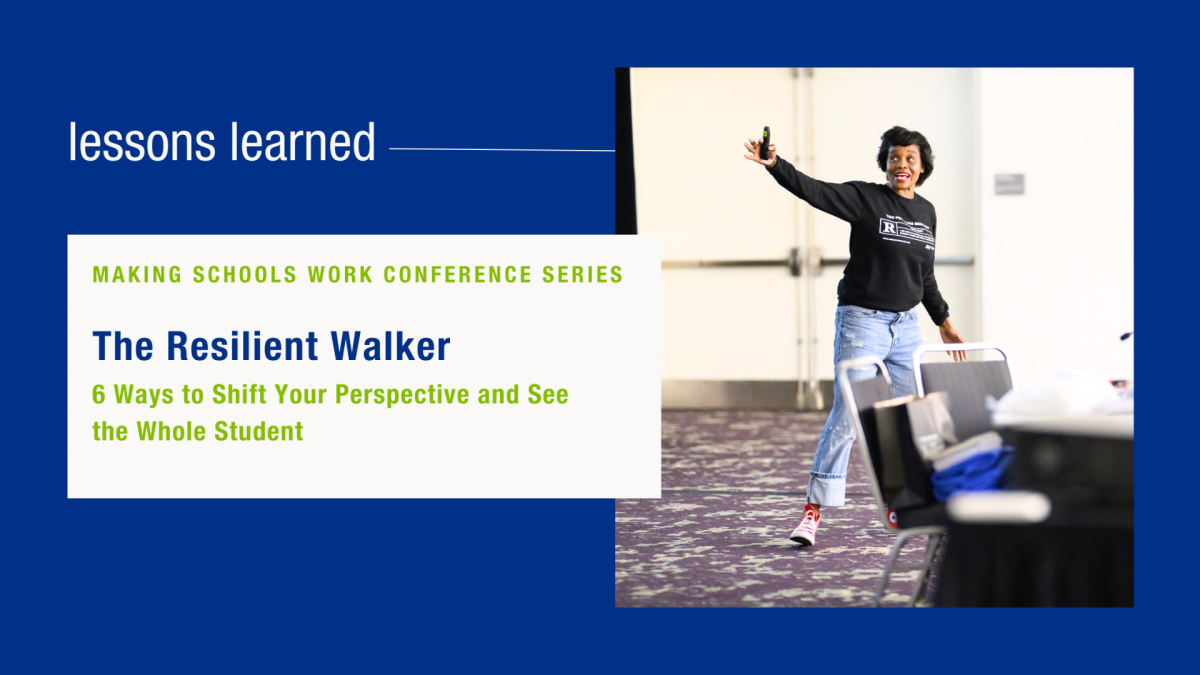
There are two ways to look at a student file. One sees a list of deficits — truancy, behavioral issues, failing grades — and prepares for a struggle. The other sees the gaps in the story, leans in and asks, “What am I missing?”
Shree Walker calls this being a “Resilient Walker.”
The best teachers tell you where to look, but don’t tell you what to see.
During her powerful session at the Making Schools Work Conference, Walker didn’t just tell us to have high expectations for students; she forced us to confront the biases that prevent us from having them. She took the room on an emotional journey — from a simple paper-folding task to a tear-jerking story about a kitchen table — to prove one undeniable truth:
“The best teachers tell you where to look, but don’t tell you what to see.”
This post captures the heart of her session, distilled into six shifts in perspective that can help you see the resilience in every student, no matter their background.
1. Test Your Awareness: You See What You Look For

Walker opened with a classic psychological exercise: the “Moonwalking Bear” awareness test. She showed us a video and asked us to count the passes made by a basketball team. We were so focused on the count that many of us missed a bear moonwalking across the screen.
“It is easy to miss something you’re not looking for,” she reminded us.
This wasn’t just a parlor trick; it was a diagnostic for educators. If we go looking for problems, we will find them. If we go looking for “ghosts in the classroom”— our own insecurities, fears and biases — we’ll project them onto our students and miss important signs we weren’t looking for.
It is easy to miss something you’re not looking for.
The first step to being a Resilient Walker is to realize that your perspective is limited by your expectations.
2. Remember That Money Solves Money Problems — Nothing Else
The core of the session involved a high-stakes activity. We were given seven student profiles with brief summaries of their struggles with foster care, wealth, activism or poverty. We were told we had “all the money in the world” but could only select one student to save.
What kind of problems does money solve? Money problems. That’s the only thing it solves.
One of the most poignant moments of the “Seven Applications” exercise was the discussion around Kennedy, a wealthy student. Many educators passed her over because they assumed her family’s money insulated her from trauma.
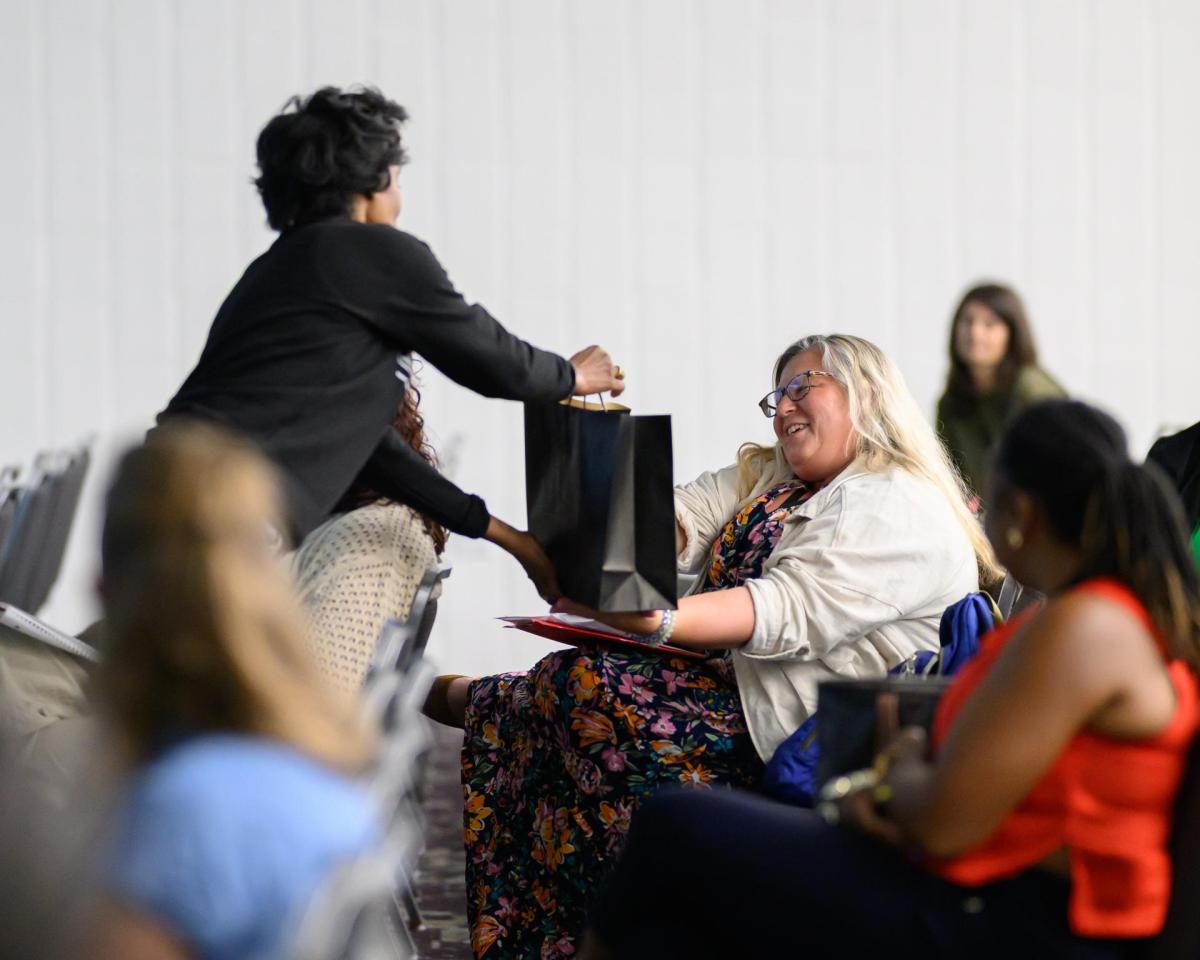
Walker shut that down quickly.
“What kind of problems does money solve? Money problems. That’s the only thing it solves.”
Trauma, neglect and the need for connection do not check tax brackets. A Resilient Walker understands that a student in a pristine uniform can be just as broken as a student in tattered clothes.
3. Redefine Where Wisdom Comes From
Walker shared her own story, describing herself as the child who sat under the kitchen table while her mother — a “kitchen beautician” — did hair.
According to Walker, a kitchen beautician is a beautician that does hair in the kitchen because they don’t have a license.

On paper, that household looked like poverty and instability. But Walker reframed it. Under that table, she learned how to listen (“ear hustling”). She learned the difference between a house and a home. She learned survival skills from the community that flowed through that kitchen.
We often look at students’ home lives and see only what is lacking. We fail to see the grit, the street smarts and the community wisdom they are acquiring every day.
4. Shift the Narrative: “You Are Not a Problem”
Walker showed a video of a student named Clint, a fidgety kid who was constantly in trouble for tapping on his desk. He was sent to the principal, yelled at and told to “sit on his hands.”
Then came Mr. Jensen. He didn’t see a disruption; he saw a drummer. He handed Clint a pair of drumsticks and said, “You’re not a problem.”
That student grew up to play drums all over the world.
Walker urged us to adopt the “Mindset, Education, Execution” framework. Mr. Jensen shifted his mindset (this isn’t noise, it’s talent), used his education (pedagogy), and executed a plan (gave him the sticks).
How many “problems” in your classroom are actually talents waiting for the right tool?
5. Recognize Your Own Superpower
Walker described her own gift as being a challenger, saying, “I don’t chase environments. I change them.”
She reminded us that we are the Resilient Walkers. We have endured our own degrees, our own traumas and our own long nights not to be mediocre, but to make a difference.

However, to have the greatest impact, you need to know yourself and your gifts. You also need to find the best way to bring those gifts out of yourself for the benefit of your students and your school.
6. Convince Yourself of the Truth
Walker closed by being vulnerable about her own imposter syndrome. Despite her doctorate, her titles and her success, she still has moments where she feels like that little girl under the kitchen table.
“We have to make sure we convince ourselves of the truth,” she said.
The truth is that less than 1% of the population has achieved what she has. The truth is that she — and you — are supposed to be here.
When the work gets hard and the ghosts of our insecurities creep in, we have to remind ourselves that we are equipped, we are capable, and we are necessary.
Takeaway
Walker’s session wasn’t just about teaching strategies; it was an “awareness test” for the soul.
We are constantly filtering our students through our own biases, deciding who is “teachable” and who is “trouble” before the bell even rings. Being a Resilient Walker means crumpling up those biases, looking past the surface and deciding to see the moonwalking bear in every child.
As Walker put it, “I decided I was gonna change the world.”
Now, it’s your turn to decide.
For more tips and ideas like these, make sure you sign up for our Promising Practices Newsletter and subscribe to our Making Schools Work podcast, available wherever you listen to your podcasts.