

Underdog Leadership: Moving from “Low-Performing” to Top 5%
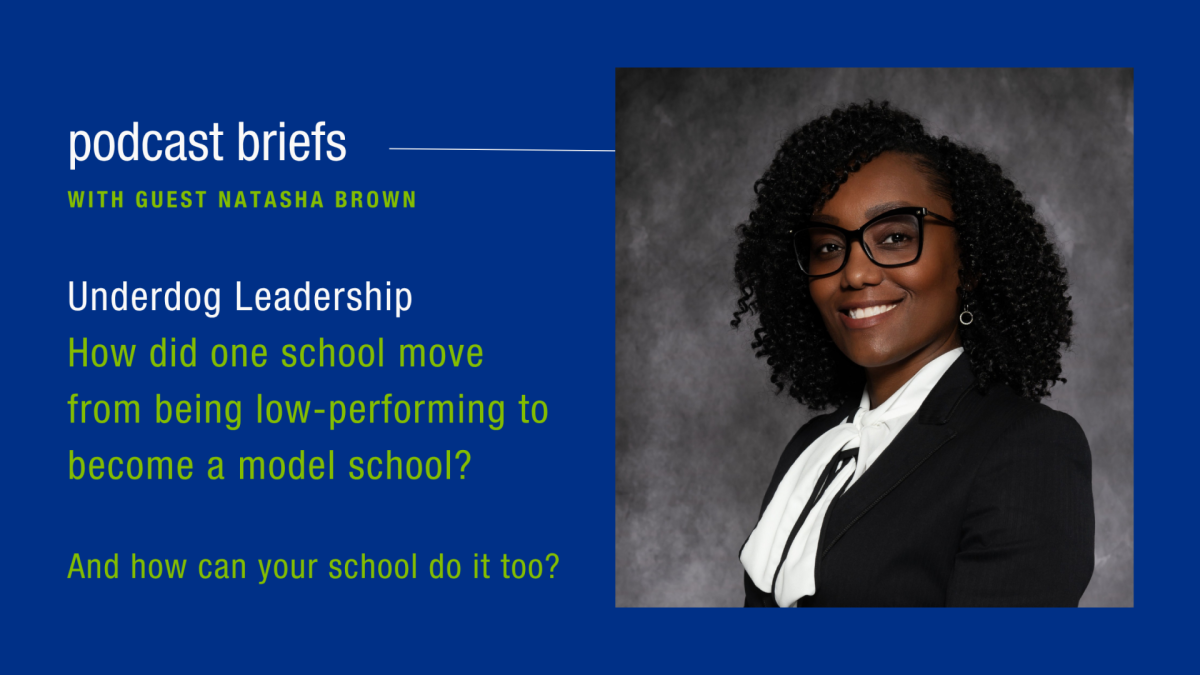
What happens when a “Pandemic Principal” walks into a school historically labeled as low-performing? For Natasha Brown, principal of Westover Middle School and author of Underdog Leadership, coming into a new school as principal right before COVID hit meant having to toss her 90-day plan. Instead, she realized she needed to embrace the underdog mentality — the competitive drive to win when nobody expects you to.
In our latest episode, Brown sits down with Daniel Rock and Erin Anderson Williams to share the exact systems she used to drive her school to a staggering 99.3% academic growth rate, placing them in the top 5% of all schools in North Carolina.
The Three S’s: Stance, Systems and Support
Brown’s leadership philosophy is built on three pillars that she calls the “Three S’s:”
- Stance: This is the mindset shift. It’s moving students from thinking they can’t compete to a mindset of “I can hang with the best of them.”
- Systems: Good intentions don’t drive growth; clear, aligned systems do.
- Support: You cannot lead a high-needs school from an ivory tower. Support means modeling the work, picking up a squeegee if needed and co-teaching in the classroom.
Rethinking the PLC: Data Days vs. Content Days
One of the most practical takeaways from this conversation is Brown’s specific structure for professional learning communities. She believes that for a PLC to be effective, it cannot be a gripe session or a box-checking exercise.
At Westover Middle, they follow a strict weekly rhythm:
- Tuesday (Data Day): Teachers bring recent assessments, disaggregate the data and identify exactly which students need reteaching, acceleration or remediation.
- Thursday (Content Planning Day): Teachers take the data from Tuesday and build the next week’s lessons. This includes practice runs — or lesson studies — where teachers model their instruction for their peers and receive real-time feedback.
The Human Side of Leadership
While the data is impressive, Brown emphasizes that high growth is impossible without a healthy, collaborative culture. She acknowledges the reality of the teacher shortage and the high turnover that plagues high-needs schools.
Her solution? Treat the staff like family. Brown shared how she created a support system by having staff walk the young children of her teachers from the nearby elementary school over to the middle school after class. This small shift removed a major stressor for her educators, allowing them to remain focused on their students.
Owning the Narrative
Whether it’s an undefeated football team or a 99.3% growth rate, Brown has built a culture of pride. She encourages her students to take voice in their school by writing statements when conflicts arise, turning potential discipline issues into restorative conversations.
“Principals cannot do things in silos,” she notes. “You have to build your team.”
By distributing leadership and being transparent about the vision, she has turned a school that was once cloudy into a model of success.
Hear More From Natasha Brown

You can listen to the whole conversation with Brown on her episode of our Making Schools Work Podcast.
If you are attending the 2026 Making Schools Work Conference in Nashville this July 14-17, then make sure to attend Brown’s featured speaker session on Wednesday at 9:15 am.
And make sure you catch every episode of our podcast by liking and subscribing to the Making Schools Work Podcast wherever you listen to your podcast.