

The Art of the Instructional Conversation
Last week, we recapped the first half of our podcast conversation with Principal Baruti Kafele. In that post, we talked about why school leaders should not only make appearances in teachers’ classrooms, but they should also be having a pre- and post-conversations with their teachers about what they are seeing there.
This week, we are recapping the second half of this two-part podcast series. Kafele moves the conversation from the “Why” of leadership to the tactical “How.” Shifting from a “Gotcha” mentality to a “Grow You” model requires more than just a checklist; it requires a sophisticated mastery of people skills and a relentless commitment to formative development.
Building a Culture of Instructional Leadership
The transition from evaluator to coach fails if it isn’t part of the school’s “norm.” Kafele emphasizes that for feedback to be effective, teachers must embrace it as an inherent part of the school’s identity:
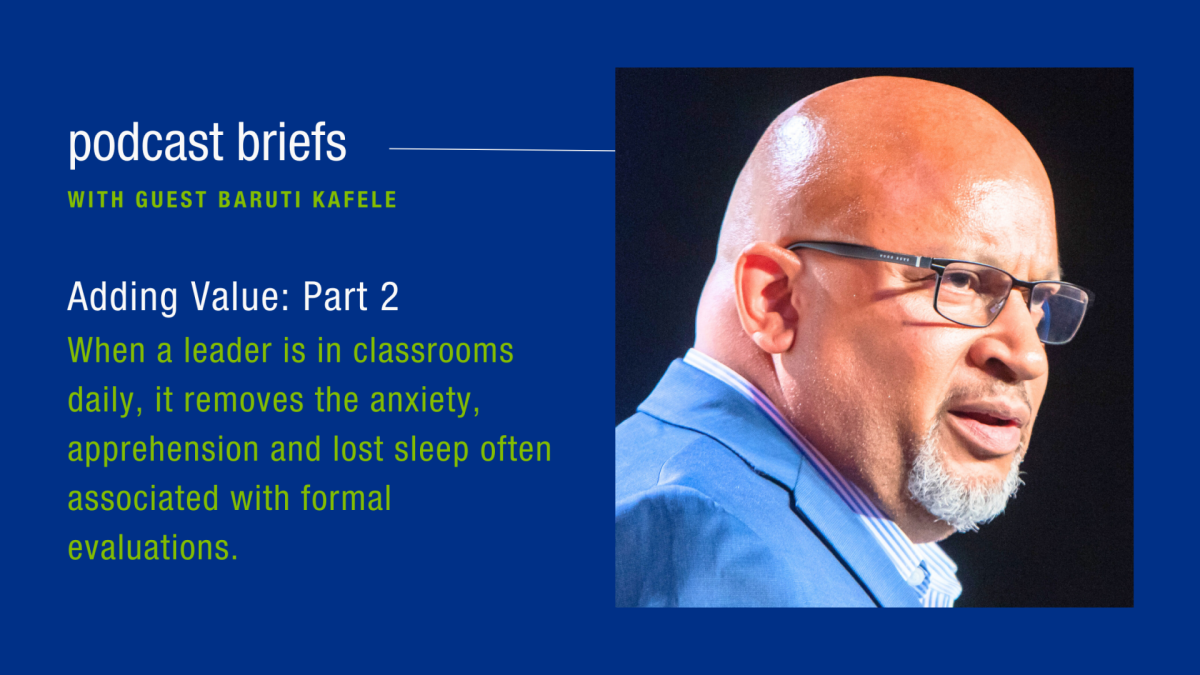
- Consistency as a Safeguard: When a leader is in classrooms daily, it removes the anxiety, apprehension and lost sleep often associated with formal evaluations.
- “Grow You” vs. “Gotcha”: The primary purpose of this process is not punitive; it is an extension of professional learning that happens where the “rubber meets the road”—in the classroom, not just in a workshop or book study.
Mastering the Nuances of Communication
Kafele emphasizes that how a leader shows up in a room is just as vital as the feedback they deliver. He suggests several strategic nuances to level the playing field:
- Neutral Territory: Move the conversation out of the principal’s office and into the teacher’s classroom or a neutral space to reduce the psychological power dynamic.
- Intentional Seating: Sit in a student’s chair so the teacher remains physically higher, signaling that the leader is there to support, not to dominate.
- The Weight of the Voice: Kafele discusses the importance of being aware of one’s own voice and facial expressions, noting that a hard stare or an intimidating tone can be a liability when trying to build a productive relationship.
Reading the Room and the Individual
The final key to instructional value is the ability to adapt leadership styles. Kafele performs an audience analysis for every teacher:
- Adaptability: A leader cannot be the same person with every teacher; they must adapt to different personalities, experiential backgrounds and dispositions.
- Common Ground: Every post-observation conversation should search for areas of agreement first to allay anxiety before moving into constructive growth areas.
Hearing More From Principal Kafele

If you haven’t already, make sure you go back and read part 1 of this series on advice from Kafele (or listen to the full episode this post and the first post are based around).
You can also attend his session at the Making Schools Work Conference in Nashville this July. He will be speaking in one of the featured speaker spots on Wednesday afternoon at 1 p.m.