

The Resistance Solution: How to Stop Misdiagnosing Teachers (or Anyone Else)
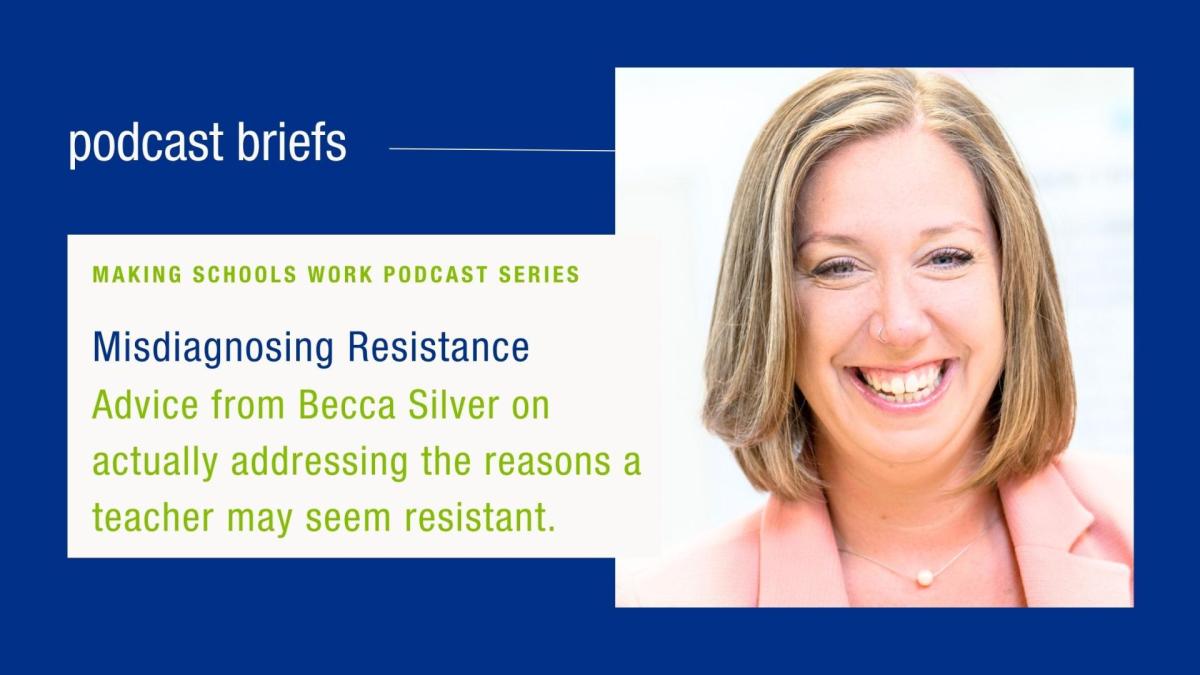
Ask any instructional coach or school leader about their biggest challenge, and the answer is almost always the same: “How do I work with resistant teachers?” Becca Silver, founder of The Whole Educator and author of The Resistance Solution, says we’ve been looking at this challenge all wrong.
In our latest podcast episode, Silver sits down with SREB’s Daniel Rock and Jason Adair to explain why resistance isn’t a personality trait — it’s an experience caused by unmet needs.
Resistance as an Experience, Not an Identity
The first mistake leaders make is labeling people. When we call someone a “resistant teacher,” we tend to keep them stuck in that role in our minds. Silver suggests a critical reframe: People are simply experiencing resistance.
“I’m not a happy person, and I’m also not a sad person. I experience happiness, and I experience sadness,” Silver explains. Resistance is no different. It moves through us, especially when we are asked to change in ways we didn’t choose.
When working with teachers who are experiencing this specific emotion, remember that resistance is a symptom, and we need to find the cause instead of blaming the teacher.
The 5 Catalyst Mindsets
If resistance is the symptom, unmet needs are the cause. Silver identifies five specific mindsets we need to support in teachers if we want to help them move past resistance:
- Value: Do they believe this change is useful for them or their students?
- Belonging: Do they feel safe, trusted and part of the team?
- Success: Do they believe they can actually achieve desired outcomes?
- Growth: Is it safe for them to be messy and make mistakes?
- Ownership: Do they believe that taking responsibility will actually result in meaningful change?
Silver says these skills are interconnected. If you support teachers in one area, the rest often follow.
Beyond Buy-In: Moving Toward Ownership
Many leaders aim for buy-in, but Silver argues that buy-in is still a form of compliance — a leader is getting a teacher to do what the leader wants. When the ultimate goal is ownership, teachers need agency.
To get there, leaders must be clear about what is rigid and where teachers have the space to use their professional judgment. As Adair notes, we need a shift in language — moving from demanding fidelity (signaling a lack of trust) to asking for integrity (respecting the teacher’s expertise).
The “Culture of Niceness” Blocker
One of the most surprising takeaways from our conversation with Silver is the “silent progress blocker” of niceness. In many schools, harmony is valued over authenticity. We avoid the elephant in the room to keep the peace. Silver argues that this blocks true belonging. Real impact means being vulnerable enough to be authentic, not just nice.
(Connect this to our podcast with Marck Abraham, who described how to create a culture of love and accountability that helps students grow without coddling them.)
Listening to Learn
The primary tool for any coach or leader facing resistance is high-quality listening. This means silencing the internal voice that’s waiting to fire a “response dart” and instead listening for any of the five unsupported mindsets. When you meet these human needs, resistance often dissolves on its own.
Hear More From Becca Silver
To learn more great tips from Silver, make sure to listen to her full episode. If you will be attending our Making Schools Work Conference in Nashville, July 14-17, add on our Coaching That Works Learning Community* to hear Silver’s featured presentation.
You can also find Silver on her website, where she publishes a newsletter, a podcast and other useful resources.
And make sure you catch every episode of our podcast by liking and subscribing to the Making Schools Work Podcast wherever you listen to your podcast.
*Add-on fee of $200 includes three pre-conference sessions, coffee and lunch on Tuesday, two featured networking events, one deep dive general session with personalized coaching and action planning, and SREB coaching team support throughout the conference.