

Engine of Excellence: Why My Daughter’s School is Restructuring the Teaching Job
For years, we’ve heard the same story in education: teachers are burned out, classrooms are understaffed, and the traditional “one-teacher, one-classroom” model is reaching its breaking point. As a parent, you feel the reality of schools most acutely through your own child. But when I volunteer at my daughter’s school, I see a different story unfolding. Her school has moved away from the isolated model of the past and toward a strategic staffing system built on the core aspects of Opportunity Culture, one of the nation’s leading frameworks for team-based teaching, which started in the South.
I’ve visited schools across three states that have implemented strategic staffing. As a researcher and policy professional, I reviewed formal research and gathered informal data talking to the educators and observing classes. But watching the effects of strategic school design from a parent’s perspective is a professional life meets personal life revelation. It isn’t just a new way to organize desks or use coaches; it is a fundamental shift in school culture that is fueling a new leadership pipeline from within.
Beyond the Isolated Classroom
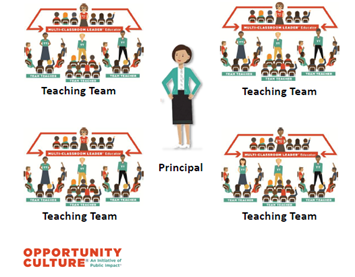 In most schools, a teacher closes their door and is expected to be “all things to all students” for the entire day. My daughter still spends the bulk of her time with her first grade teacher, but she also has five other teachers she sees each week and regularly comes home telling me of things she learned while visiting the other first grade classrooms for project-based learning.
By the third week of September, I’d already met these six teachers, two counselors and one teacher’s assistant who are all part of the team educating and caring for my daughter this school year.
Kati Begen, a high school educator, puts it bluntly: “If General Motors can completely revamp its business model…why is education staying the same? We, once again, are stalled on the side of the metaphorical road.”
 Strategic staffing is the “tow truck” that has finally arrived. And the public education business model is getting an upgrade.
By creating differentiated roles, like Multi-Classroom Leaders®, reach or impact teachers and team assistants, schools are ensuring that every teacher — and every student — has daily support from a team.
“Every teacher has support, and it’s a daily support, so your culture is going to be strong,” Ross Elementary School principal Susan Hendricks said.
A Culture of Collaboration — and Sanity
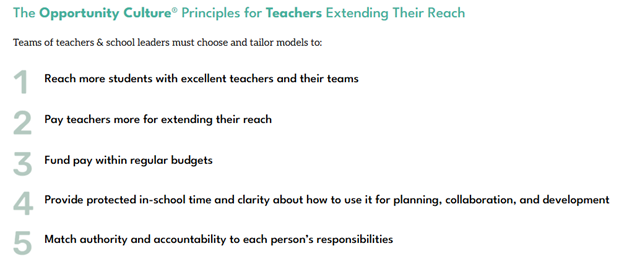
In my daughter’s school, the most visible change is the collaboration. Teachers no longer work in silos; they work in “pods” led by the team leader and supported by the MCL who co-plans, co-teaches and models teaching excellence. This teaming structure doesn’t just improve instruction and allow for more small group tutoring; it respects teacher’s time and provides a tutoring culture for the adults as well.
These models often use paraprofessionals, assistants, residents or interns to aid in individual or small group learning and classroom coverage for co-teaching or modeling time. Because they also fundamentally shift scheduling and budgets, teachers finally have what they lack in so many other schools: meaningfully increased pay for teacher leaders, protected planning time, expert-led professional learning communities, and actual lunch breaks.
Research shows that some strategic staffing models can add five to 15 extra hours of planning and collaboration time per week. For my daughter’s teacher, this means she can arrive in her classroom refreshed and prepared, rather than always rushed and exhausted. Advanced pay levels for extended roles reinforces the structure and accountability; role stipends range from $2,000 to $18,000 depending on the position.
In February, I visited two more schools that have implemented this model. An MCL at a K-8 school told me, “(Opportunity Culture) kept me here. I was excelling but I had other offers for jobs. But this model, the pay, the shift…it kept me in teaching.”
Fueling the Pipeline
Perhaps most exciting is how this model provides different roles for career advancement without forcing the best teachers to leave the classroom. In the past, the only way for a great teacher to move up was to become an administrator, leaving their students behind.
Now, expert teachers can become MCLs, earning significantly higher pay while still teaching and mentoring their peers. This is creating a network of networks within the building. One elementary principal in North Carolina noted that after implementing these models, her school went from having two instructional facilitators to 10 or more leaders who are deeply connected to student needs. Six of these teacher leaders started as paraprofessionals.
Hadley Moore, a former MCL, reflects on how this role prepared her for future leadership.
“The MCL role allowed me to grow and feel confident as an instructional leader,” Moore said. “I was not a threat or an authority figure; I was a partner.”
The Result: A Stronger Future for Our Students
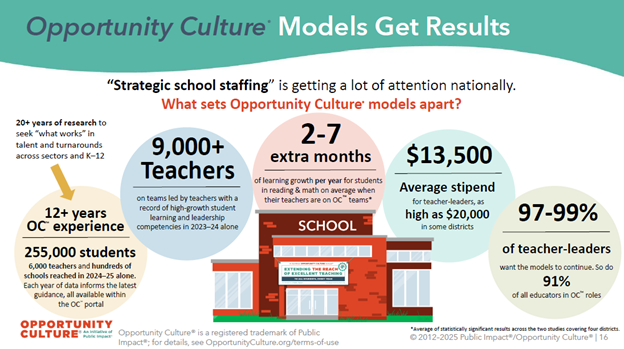
The results of this supportive culture are measurable. Studies show that students in these models achieve learning growth comparable to having a top-quartile teacher teamwide. My daughter is thriving because she isn’t just assigned to one great teacher; she is supported by a team of committed adults who advocate for her needs and help each other become better. There is a systemic structure of professional support for each teacher at every stage.
As one district superintendent noted about the model in a report on strategic staffing, it allows schools to “eliminate teacher vacancies and then reinvest that money in the most effective teachers… so today, more of our students have access to great teachers.”
Strategic staffing is more than a policy shift — it’s the design engine that drives student outcomes and helps make teaching the sustainable, professionally rewarding career it was always meant to be.
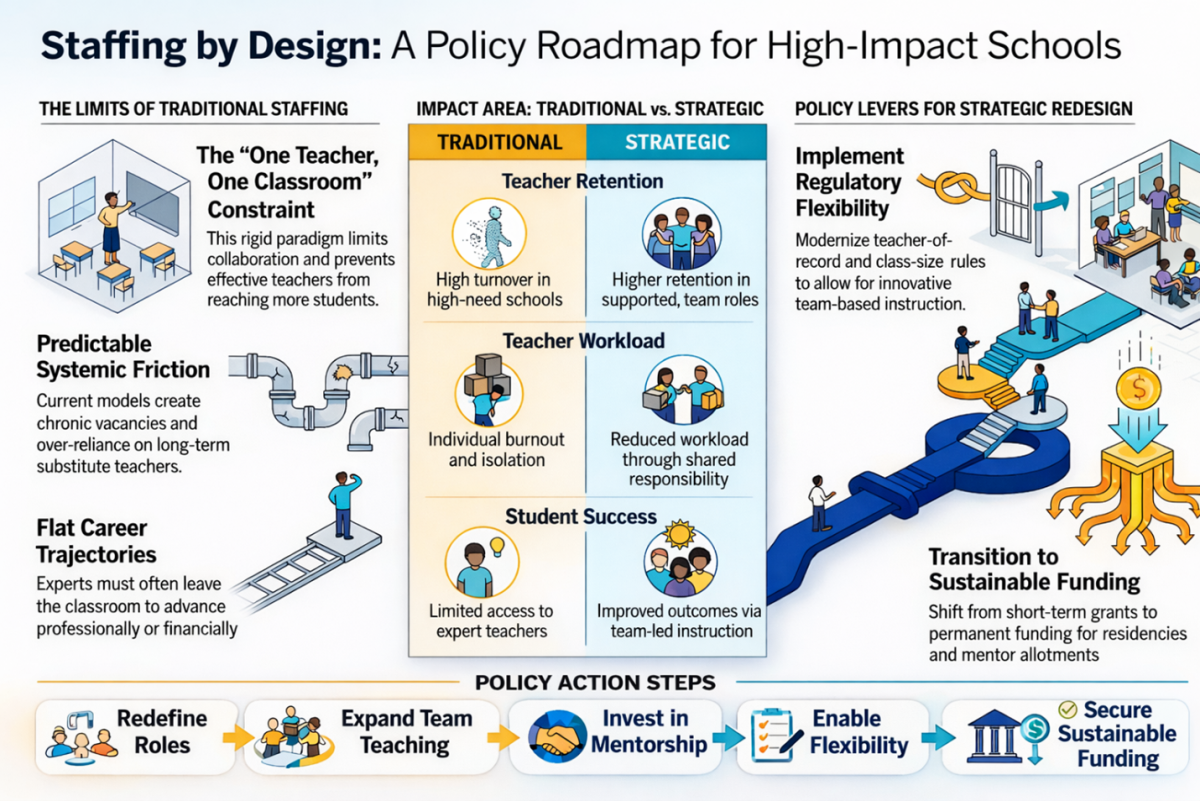
Policymakers: Check out SREB’s new report A State Policy Guide for Innovative High-Impact School Staffing Systems to find out more about how to enable strategic staffing design to flourish in districts in your home state.
Note: Quotes attributed by name were pulled from existing literature on Opportunity Culture.