

Topic: Career and Technical Education
Career & Technical Education
SREB’s leadership in career and technical education spans decades. At its core is the belief that all students can master technical and academic skills that put them on the path to credentials and rewarding careers.
We help schools inspire students with authentic, challenging learning experiences that inspire students to solve complex problems, think critically and master. Our school improvement process supports CTE programs in high schools and career and technology centers. We provide professional development and coaching on powerful CTE and project-based learning instructional practices. SREB’s Advanced Career courses are turnkey curricula in STEM fields.
And our data and policy guidance help schools connect their programs to local workforce demand.
Partnerships to Align Education and Careers
Report of the Commission on Strategic Partnerships for Work-Ready Students
This commission report offers a vision of education connected to local careers and shows how to make it a reality through partnerships and policy. With 11 recommendations to help states build strategic industry sector partnerships, the report covers policies, funding and building the capacity of educators. It also spotlights innovative solutions from around the nation.

Improving Secondary and Postsecondary Outcomes for Students with Disabilities
How can states, schools and colleges help students with disabilities to improve high school graduation rates, postsecondary success, and career and technical education participation?
This piece, produced for a request from a state department of education, includes actions to consider, examples from SREB states and a review of current research on professional development, educational technology and individualized instruction.
Designing a Ready Workforce
Opportunities for state leaders to align ESSA, Perkins V and WIOA funds
To support states as they finalize their new Perkins V and WIOA plans and consider updates to their ESSA plans, SREB reviewed a sample of states’ existing plans and identified six ways states have missed opportunities in the past to align work funded by the three federal statutes. For each missed opportunity, SREB provides questions for policymakers to consider and gives examples from states of well-aligned plans.
Powerful Project-Based Learning Instructional Practices
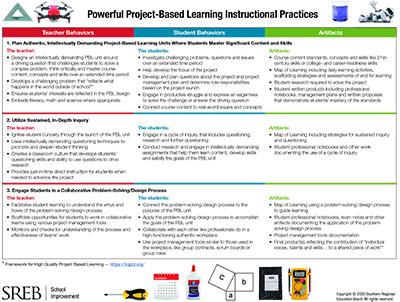 This quick-reference guide presents
examples of teacher and student behaviors and learning artifacts
found in classrooms that embrace SREB’s six Powerful
Project-Based Learning Instructional Practices:
This quick-reference guide presents
examples of teacher and student behaviors and learning artifacts
found in classrooms that embrace SREB’s six Powerful
Project-Based Learning Instructional Practices:
Shared-Time Technology Centers
A Study of Six State Funding Systems
Students need learning experiences connected with the world of work to equip them to enter the workforce and secure good jobs. This report provides an overview of funding for career and technical education and a detailed look at CTE funding models in Arkansas, Indiana, Ohio, Oklahoma, South Carolina and West Virginia. Produced by SREB for the Kentucky Career and Technical Education Task Force, it also offers considerations for actions to improve CTE.
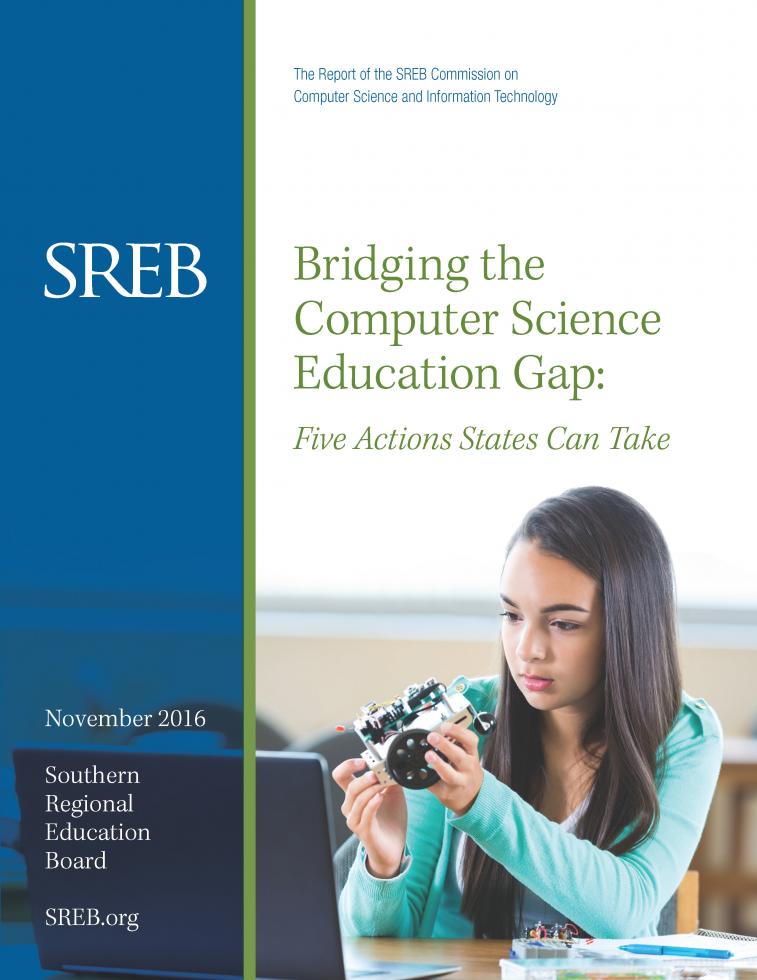
Bridging the Computer Science Education Gap
Five actions states can take
The Report of the SREB Commission on Computer Science and Information Technology
SREB’s Commission on Computer Science and Information Technology offers five actions for states and schools to help more young people — especially girls, black and Hispanic students, and students from low-income families — learn computer science and explore and choose careers in computing fields.
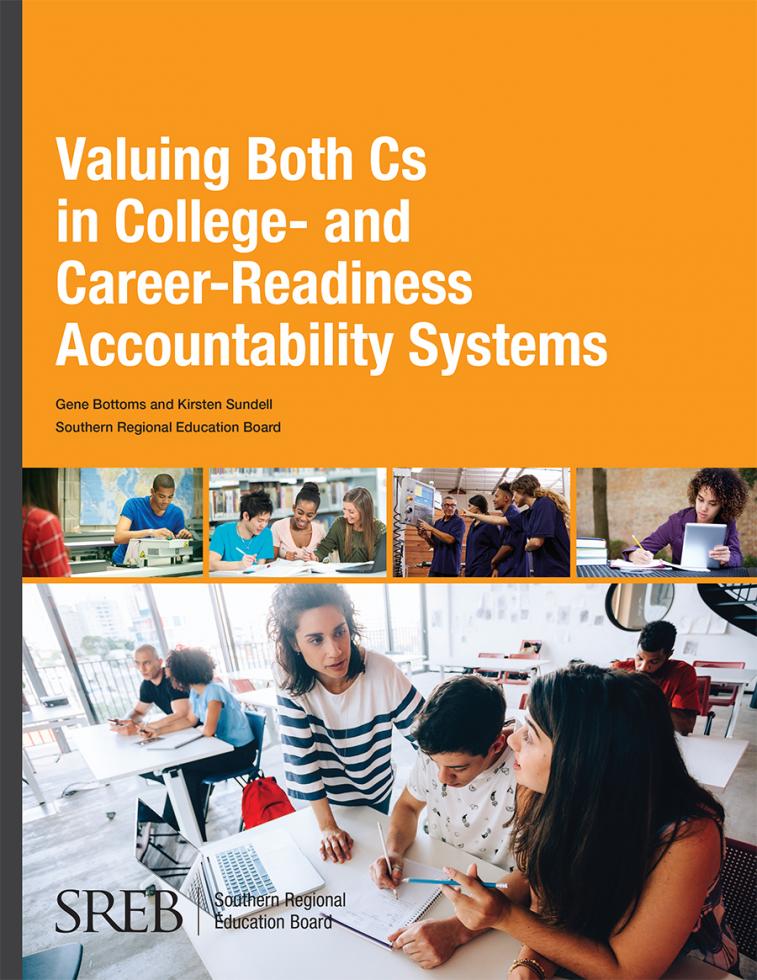
Valuing Both Cs in College- and Career-Readiness Accountability Systems
How states can use career pathways to close credential attainment and skills gaps.
This publication explores how state accountability systems currently address college readiness and academic and technical career readiness and offers recommendations and examples of policies and practices that incentivize and reward districts and schools for preparing more students to earn credentials and degrees in high-demand career fields.

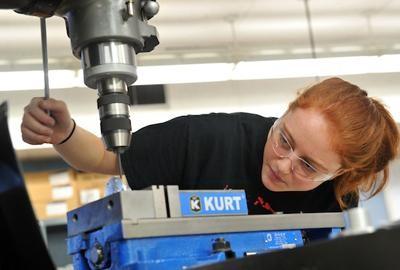
Credentials for All: An Imperative for SREB States
SREB’s Commission on Career and Technical Education offered eight actions states can take to build rigorous, relevant career pathways. Supported by policies and practices described in the report, these actions can help states increase the percentage of young adults earning valuable industry and postsecondary credentials.
Community Colleges in the South: Strengthening Readiness and Pathways
Report of the SREB Commission on Community Colleges
The full report of SREB’s Community College Commission offers 21 recommendations for states and community colleges. It presents findings on readiness, placement, math standards and structurally guided pathways to help students clearly see entry, exit and re-entry points to continue their education. Recommendations ask states to commit increased funding and hold colleges accountable for improving student services and completion. The goal: increase college access and success so more students earn postsecondary credentials and enter careers in demand in their communities.